
From Venture Capital to Building a Startup: Anna’s Shenzhen Hardware Journey
How Anna used a short Shenzhen visit to evaluate technical paths and potential partners for a custom head-mounted camera.
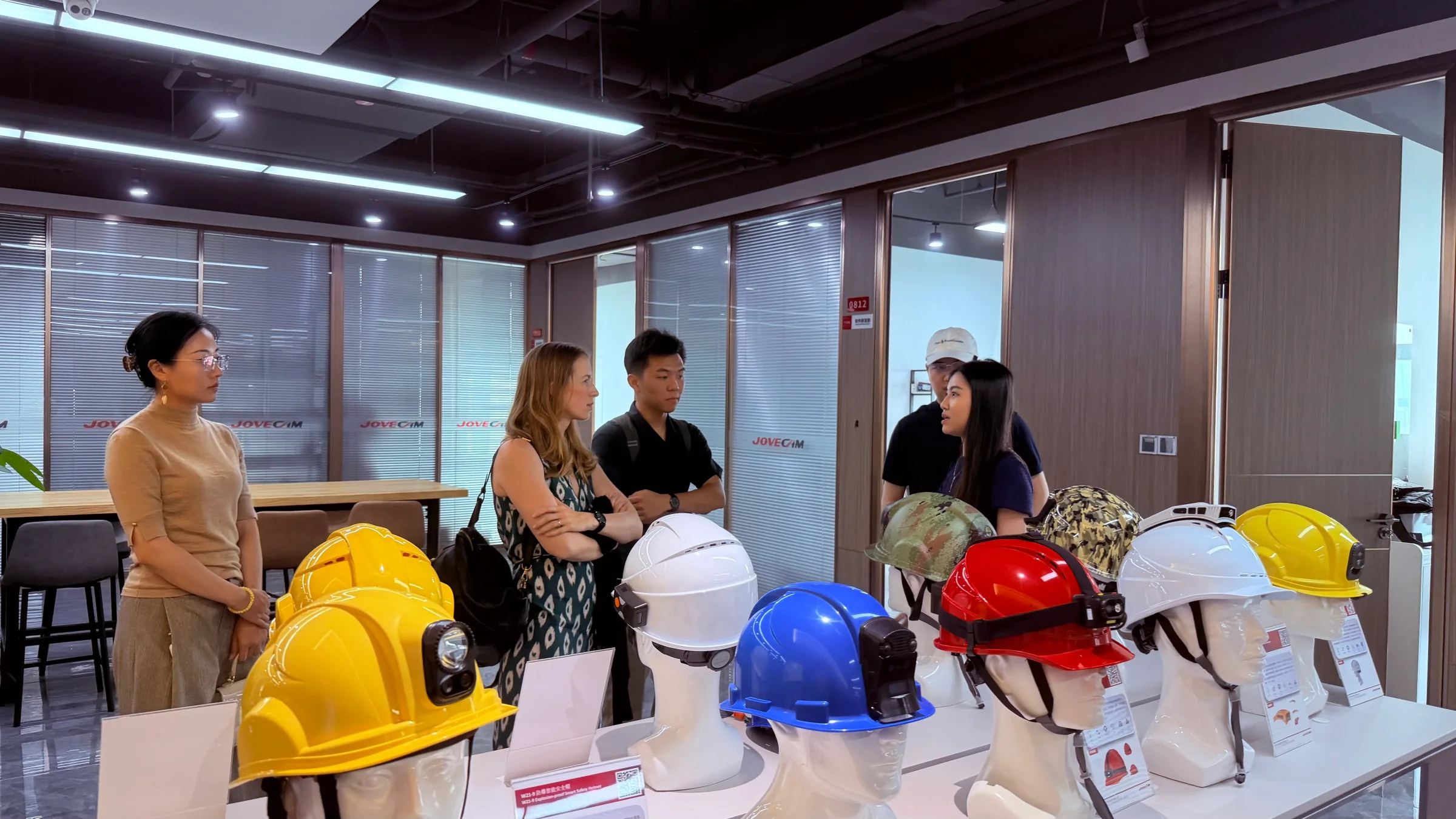
Anna left a strong impression on me. She previously worked in venture capital and started her own company last year. She is efficient, decisive, and extremely well prepared.
We were introduced by a friend in the US. After a couple of email exchanges and one video call, we decided to work together. By the time she arrived in Shenzhen, we had already been working remotely for almost a month.
My role was to help her understand Shenzhen’s hardware and supply chain ecosystem more efficiently, evaluate possible technical approaches, and identify relevant potential partners. She spent less than a week in Shenzhen, using that time to validate key technical questions and meet some of those teams for the next stage of development.
Her startup was well funded and still in an early stage of rapid growth. The priority was not simply to find someone who could make the product. It was to find a reliable solution that made sense for where the company was at that moment.
The product itself was a custom head-mounted camera for use in laboratory environments, with a set of industrial-grade requirements.
On the surface, a head-mounted camera may sound like a fairly standard piece of hardware. But before coming to Shenzhen, the team had already tested more than 20 products on the market, and none fully met their needs.
They already had customers, so they needed an interim solution for existing use cases while also pursuing a fully customized product for the longer term.
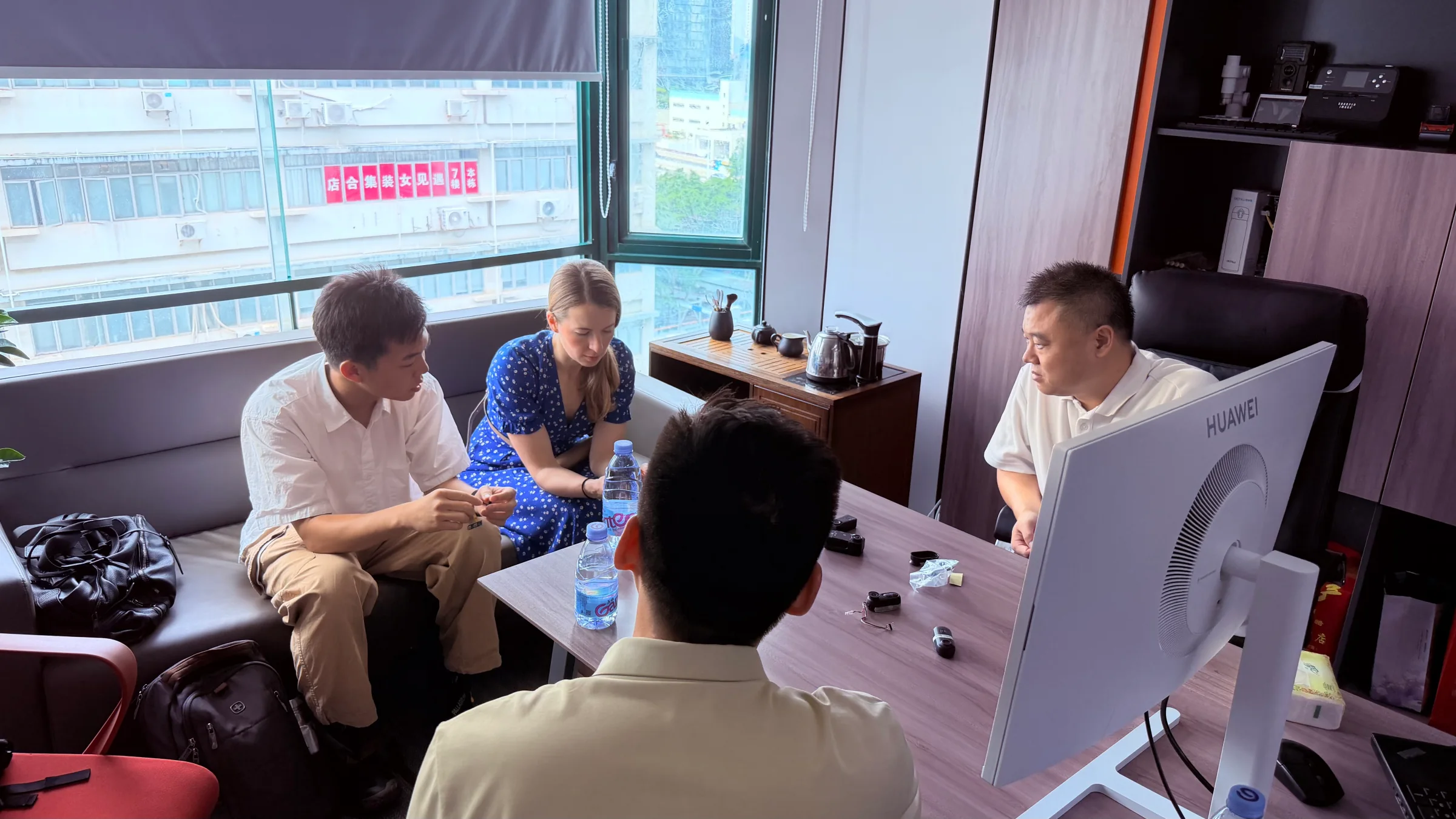
The product looked simple. The engineering was not.
Battery life, image quality, heat dissipation, eye tracking, weight, data transmission, and wearing comfort all needed to be reconsidered under their particular use conditions.
Battery life was one example. Many existing head-mounted cameras only run for around half an hour to an hour. If the device needs to operate continuously throughout the day, external batteries, replaceable power sources, or a different power architecture may need to be considered.
Weight and comfort were another challenge. Many AI glasses already become uncomfortable after being worn for half an hour or so. If someone needs to wear a device for much longer, weight distribution and overall industrial design become much more important.
The system also required multiple cameras, with different requirements for resolution and frame rate. How those cameras should be configured and how the data should be processed depended heavily on the actual application.
Heat was another issue. A device worn on the head for long periods, running several cameras and requiring extended battery life, creates a different thermal challenge. Heat dissipation becomes part of the wearing experience itself.
None of these features are unusual on their own. But once several special requirements come together, familiar hardware can quickly become a much more complicated engineering problem, requiring a rethink of both the technical path and the product design.
The real work began before Anna arrived.
Once we had a clearer product definition and had worked through the feasibility of the key technical details, we could start evaluating the Shenzhen supply chain properly.
I spoke one on one with individual engineers, small engineering studios, smaller factories, solution providers of different sizes, contract manufacturers, and other potential partners. The goal was to understand what each team was actually good at, what they had done before, how they approached the problem, and what they could realistically deliver.
The teams that looked most suitable at that stage were added to Anna’s schedule for in-person meetings once she arrived in Shenzhen.
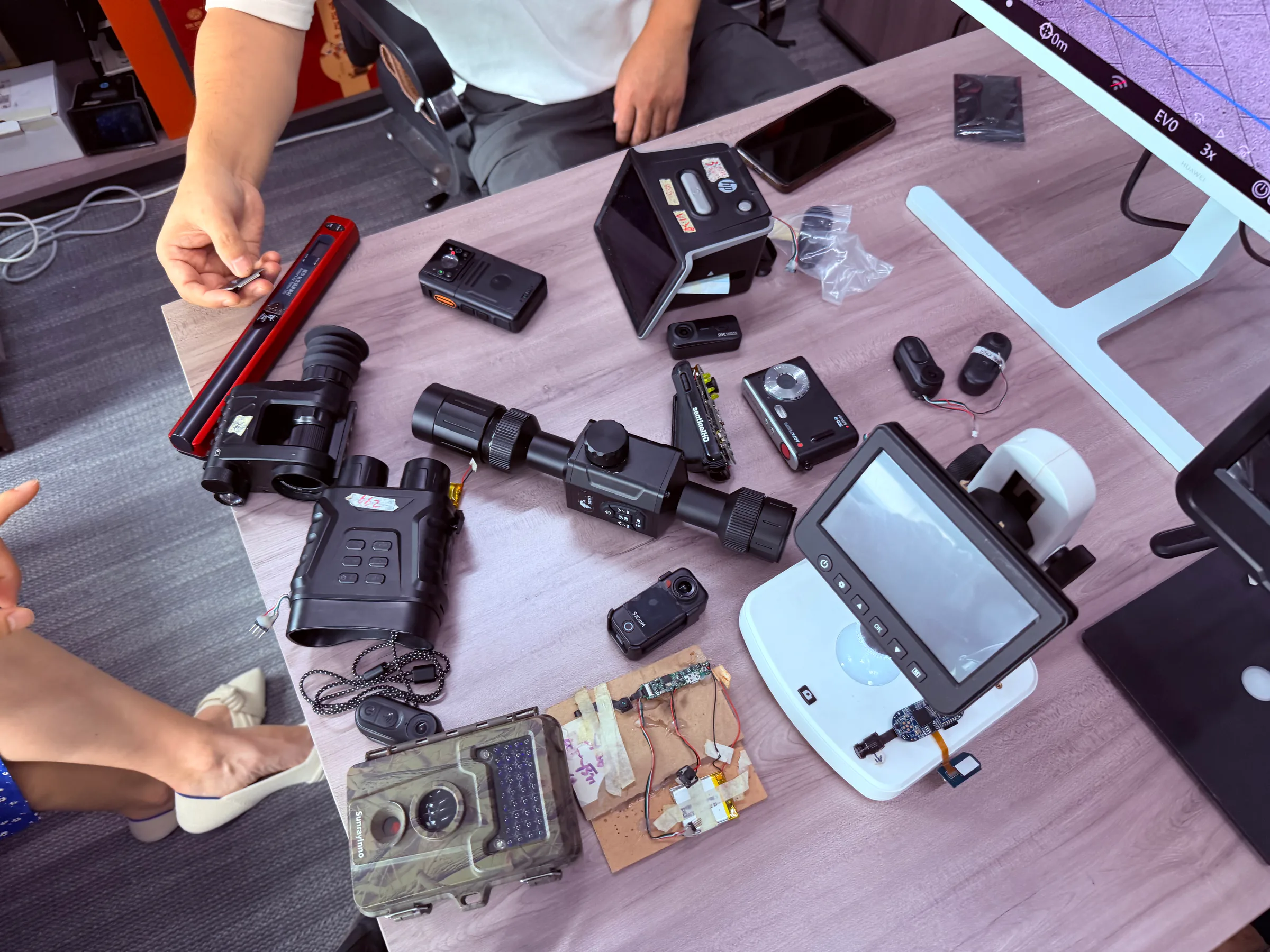
Huaqiangbei was useful—but not for this problem.
During the remote preparation stage, her team was particularly interested in Huaqiangbei. They even sent me a photo of the Pacific Security Protection Market and suggested I check it out.
In reality, that particular market mainly sells existing surveillance products, smaller camera modules, components, and related hardware. For this project, most of what was available there was not especially useful.
I still went through the market carefully, spoke with a number of shop owners, and made some new contacts.
At one point, I was almost mistaken for someone looking for hidden cameras for some kind of shady business. 😂
This is also a common misunderstanding among people coming to Shenzhen for hardware projects for the first time.
They know Huaqiangbei, but they do not necessarily know what Huaqiangbei is good for.
For existing products, components, quick experiments, or temporary solutions, it can absolutely be worth exploring. Sometimes you can find surprisingly good options.
But when a project involves deeper customization or more complex engineering, you usually need to go beyond the electronics markets and into Shenzhen’s wider network of engineering teams, solution providers, manufacturers, and specialized factories.
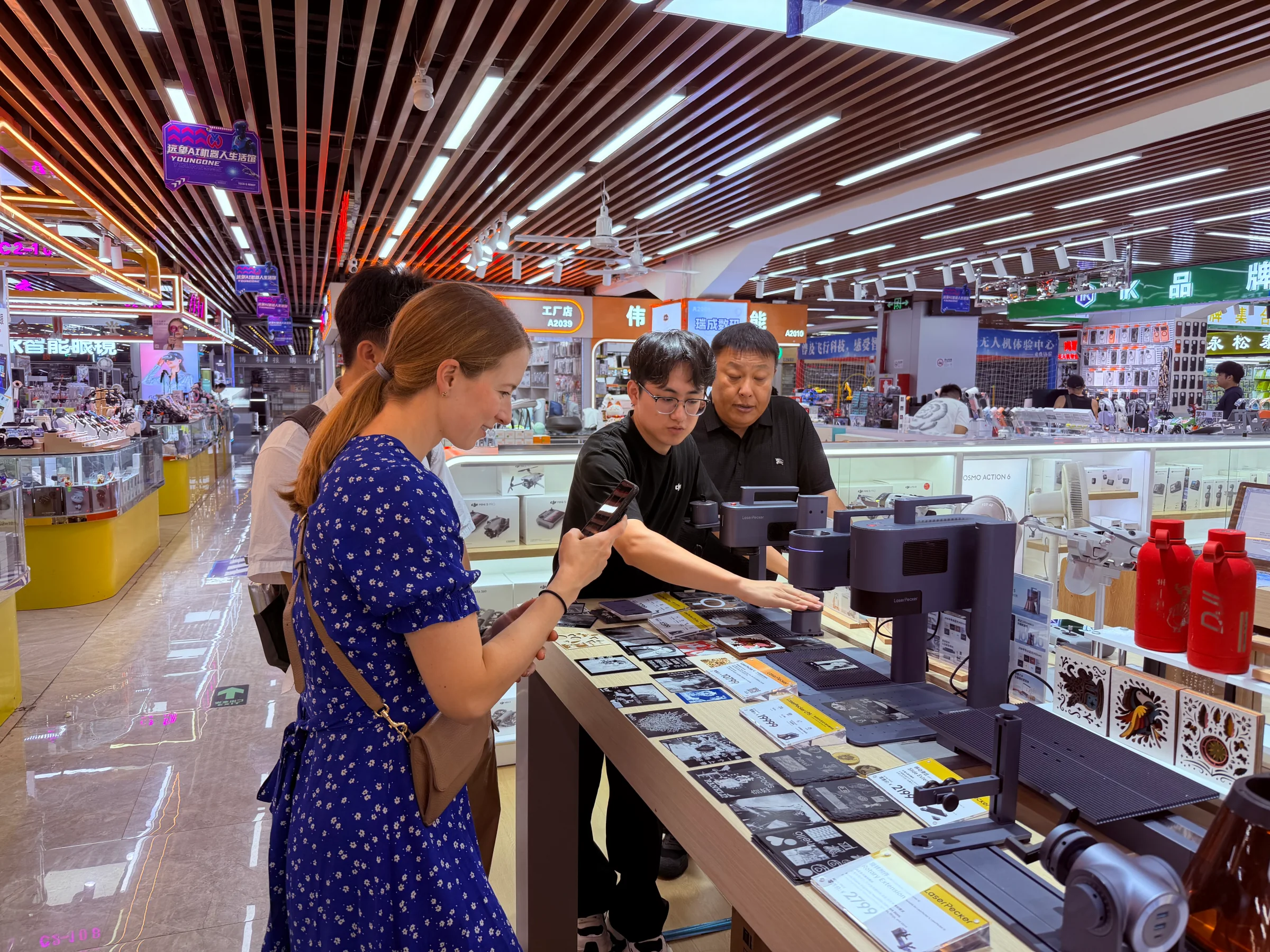
The biggest supplier was not necessarily the right partner.
For the interim solution, I also spoke with smaller engineering studios and companies already producing industrial head-mounted products for professional applications.
Modifying an existing product was possible, but every option came with limitations and compromises.
Engineers, solution providers, and factories all have different strengths.
The biggest company is not necessarily the best one.
What matters is whether a partner is right for the project, its technical requirements, and the company’s current stage.
Shenzhen has an incredibly deep supply chain, but that depth also makes it complicated. If your requirements are not clear, or you do not know how to evaluate the options in front of you, choosing the wrong technical path or partner can create significant sunk costs.
More importantly, it can cost months.
For a startup moving quickly, that can be far more damaging than the money itself.
Speed came from preparation.
What impressed me about this project was not only the Shenzhen supply chain, but also the way Anna worked. I learned a lot from how she prepared, evaluated people, made decisions, and then moved quickly.
Our own collaboration was a good example. She first used email to see whether I understood the project and what her team was trying to accomplish. Once the technical communication made sense, we had a relaxed video call so she could get a better sense of how I communicated and whether I was someone she could rely on locally. Once she made the decision, we started immediately.
After working with Anna for those few days, I sometimes felt that the US startup and investment world can be every bit as intense as Shenzhen’s famous 996 work culture.
She landed in Shenzhen, went straight to the hotel and into meetings, then caught up on sleep in taxis between them. During her short stay, I arranged meetings with six different potential partners.
I genuinely admired that level of preparation and execution.
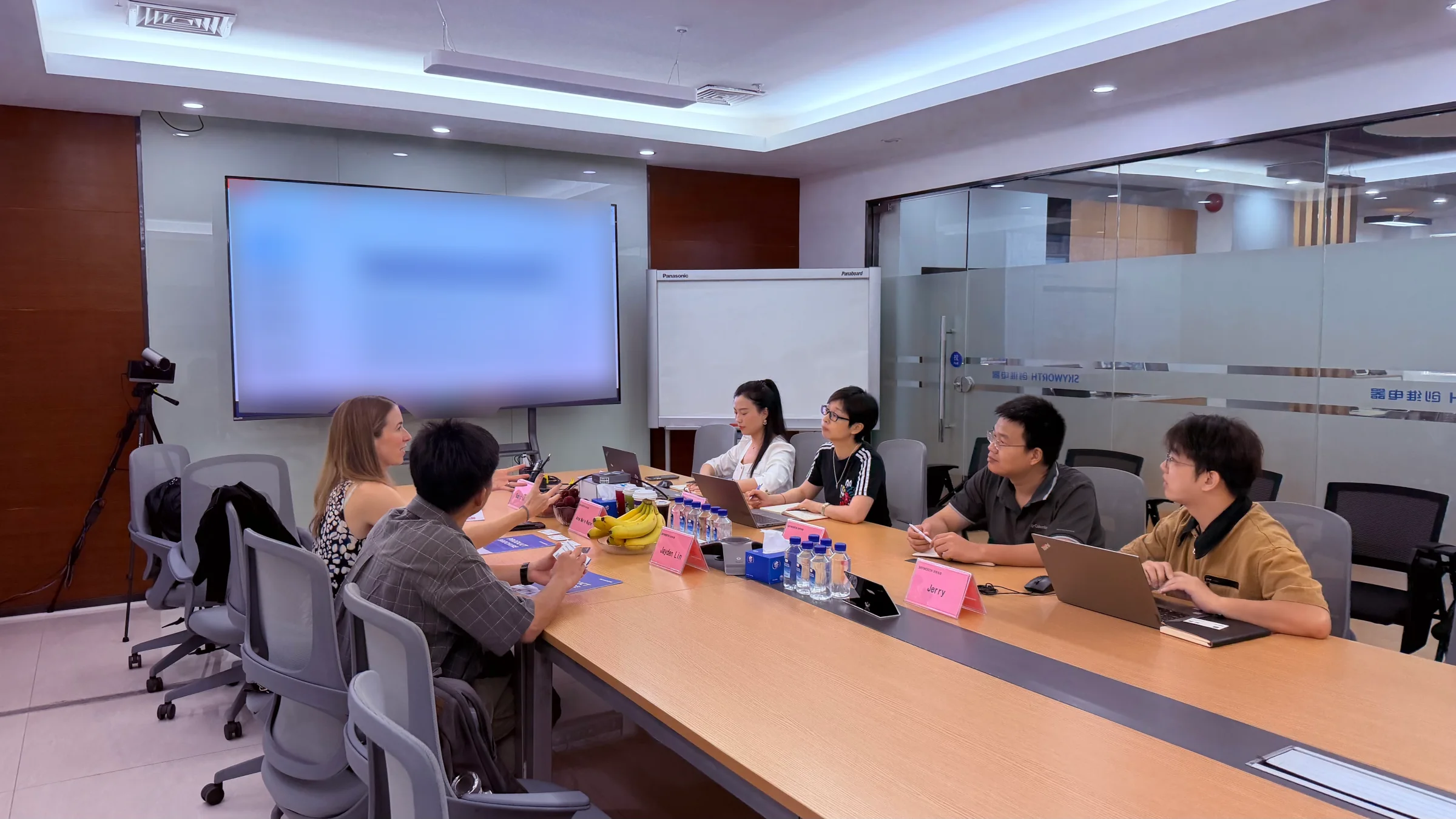
The real value is finding the right fit.
This is probably one of the reasons I increasingly enjoy working on projects like this.
What makes Shenzhen valuable is not simply that “you can make anything here.” It is that a complicated hardware problem can be broken down, tested against real engineering and manufacturing capabilities, and connected with the people and solutions that make sense for that particular stage.
In the future, when the timing is right, I would also like to take that connection in the other direction by bringing capable Shenzhen teams overseas to engage directly with founders, companies, and markets around the world.